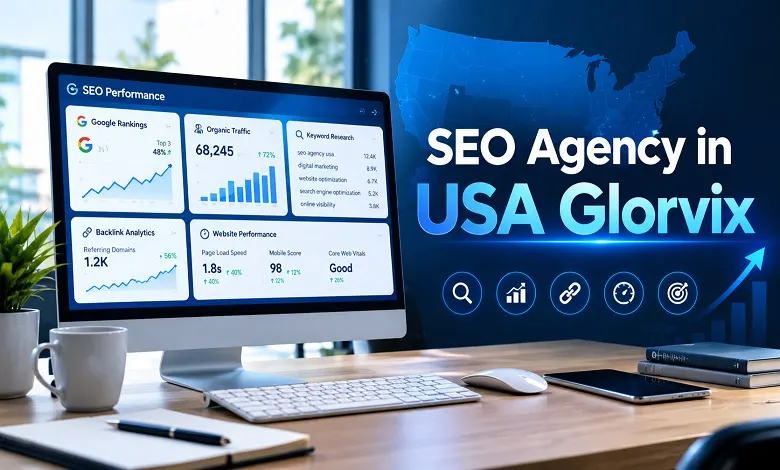
In today’s competitive digital world, having a website is not enough to attract customers. Businesses also need strong search engine visibility to reach their target audiences. When people search for products, services, or solutions online, they usually click on websites that appear near the top of search results. This is why search engine optimization (SEO) plays an important role in online business growth. Understanding how SEO Agency in USA Glorvix can boost your website rankings can help businesses explore ways to improve their digital presence.
Search engine optimization involves improving different aspects of a website so search engines can understand its content and present relevant pages to users. It includes keyword research, technical improvements, content optimization, link building, and user experience enhancements. When these activities work together, a website has a better opportunity to attract relevant organic traffic.
For businesses operating in the United States, SEO can be especially valuable because customers often use search engines to discover local companies, compare services, and make purchasing decisions. A well-planned SEO strategy can help businesses reach these potential customers without relying entirely on paid advertising.
What Is SEO and Why Does It Matter?
Search engine optimization is the process of improving a website to increase its visibility in unpaid search engine results. Unlike paid advertising, which generally stops generating traffic when a campaign ends, effective SEO can continue attracting visitors over time.
SEO involves several interconnected activities. These include researching relevant keywords, creating useful content, improving website performance, organizing pages, and earning credible backlinks.
For example, a digital marketing company that wants to attract customers searching for SEO services in the United States needs content that answers their questions and demonstrates relevant expertise. It also needs a technically sound website that search engines can crawl and index.
SEO matters because it helps businesses connect with people who are already looking for information, products, or services related to their offerings. Rather than reaching a broad audience with an advertisement, companies can attract visitors whose searches indicate a specific interest.
How SEO Agency in USA Glorvix Can Help Improve Website Rankings
Businesses researching SEO Agency in USA Glorvix may want to understand how professional SEO strategies can support their online growth. Although individual results depend on a website’s current condition, competition, and optimization efforts, several core SEO practices can help improve search visibility.
1. Conducting Detailed Keyword Research
Keyword research is an important part of any successful SEO campaign. It helps identify the words and phrases people use when searching for specific products, services, or information.
Choosing appropriate keywords allows businesses to create content that matches their audience’s search intent. Instead of targeting only broad phrases, companies can explore more specific keywords that reflect what potential customers need.
For example, a business offering digital marketing services might target phrases such as:
- SEO services for small businesses in the USA
- Professional search engine optimization services
- Local SEO strategies for American businesses
- How to improve website rankings on Google
- Organic traffic growth strategies
These examples represent different search intentions. Some users are looking for a service provider, while others want information before making a decision.
A well-planned keyword strategy considers search intent, keyword relevance, competition, and the website’s ability to provide a useful answer. Businesses should avoid selecting keywords solely because they have high search volumes.
When exploring SEO Agency in USA Glorvix, readers should also consider how naturally the target keyword fits into page titles, headings, introductory paragraphs, and relevant sections. Keywords should support the content rather than make it difficult to read.
2. Improving On-Page SEO
On-page SEO focuses on optimizing individual website pages so search engines and visitors can understand their purpose.
Even valuable content may struggle to perform well when its structure is confusing or important information is missing. On-page optimization helps address these problems.
Important on-page SEO elements include:
Title tags: Each page should have a clear, descriptive title that communicates its main topic.
Meta descriptions: A relevant meta description can summarize the page and encourage users to click through from search results. Google may generate a different snippet depending on the search query.
Headings: H1, H2, and H3 headings help organize information into logical sections.
Content quality: Pages should answer readers’ questions accurately and provide meaningful information rather than repeat the same keywords.
Internal links: Links between related pages help visitors discover additional resources and help search engines understand relationships between pages.
Image optimization: Descriptive file names, suitable image formats, and useful alternative text can improve accessibility and help search engines interpret images.
For example, a service page should explain what a business offers, who can benefit from the service, and what makes its approach relevant. Clear information is more useful than a page filled with repetitive marketing language.
Businesses considering SEO Agency in USA Glorvix can use these on-page principles to evaluate whether their website content is structured to serve both readers and search engines.
3. Creating Helpful and Relevant Content
High-quality content is a central part of sustainable SEO. Search engines aim to provide results that satisfy users’ needs, so businesses should focus on publishing accurate, original, and helpful information.
Content can take several forms, including blog articles, service pages, tutorials, case studies, comparison guides, and frequently asked questions.
For example, a home improvement company could publish a guide explaining how to choose energy-efficient windows. A software company might create a tutorial showing how its product solves a common problem. A local service provider could answer frequently asked questions about pricing, availability, and the service process.
The most effective content strategies begin with a clear understanding of the audience.
Before publishing an article, consider these questions:
- What problem is the reader trying to solve?
- What information would help them make a decision?
- Does the article offer useful details beyond existing search results?
- Are the facts accurate and supported by reliable sources?
- Is the information easy to read and navigate?
Businesses should also update older content when information becomes outdated. Removing inaccurate details, adding relevant explanations, and improving unclear sections can make existing pages more useful.
The goal is not to publish as many articles as possible. Instead, it is to create content that genuinely serves the intended audience.
4. Strengthening Technical SEO
Technical SEO helps search engines access, crawl, understand, and index a website. It also supports a smooth browsing experience for visitors.
A website can contain excellent content and still experience search visibility problems if important pages cannot be crawled or indexed properly.
Common technical SEO tasks include:
- Checking whether important pages can be crawled and indexed.
- Fixing broken internal links and relevant 404 errors.
- Reviewing robots.txt directives.
- Submitting and maintaining an accurate XML sitemap.
- Correcting inappropriate canonical tags.
- Improving mobile usability.
- Reducing unnecessary redirects.
- Identifying duplicate or thin pages.
- Reviewing website security and HTTPS configuration.
- Monitoring Core Web Vitals and page performance.
For example, if a valuable service page contains a noindex directive, it may not appear in search results. If multiple pages contain conflicting canonical signals, search engines may have difficulty determining which URL should be treated as the preferred version.
Technical audits can identify these issues and help website owners prioritize fixes according to their potential impact.
When evaluating SEO Agency in USA Glorvix, businesses should look for a clear explanation of technical problems, recommended solutions, and how improvements will be measured.
5. Improving Website Speed and User Experience
Website performance affects how easily visitors can interact with a page. Slow loading, difficult navigation, intrusive pop-ups, and poorly displayed mobile layouts can frustrate users.
A positive user experience helps visitors find the information they need and complete important actions, such as submitting a form, contacting a business, or purchasing a product.
Several improvements can support a better experience:
Optimize images: Compress large images and use modern image formats when appropriate.
Reduce unnecessary scripts: Review third-party tools, plugins, and scripts that may delay page rendering.
Improve hosting performance: Choose hosting that can reliably support the website’s traffic and technical requirements.
Simplify navigation: Organize menus and page structures so visitors can locate important information quickly.
Design for mobile devices: Ensure that text, buttons, forms, and navigation work well on smaller screens.
Monitor Core Web Vitals: Evaluate loading performance, interaction responsiveness, and visual stability.
Google’s Core Web Vitals include Largest Contentful Paint (LCP), Interaction to Next Paint (INP), and Cumulative Layout Shift (CLS). These metrics provide useful information about the experience users have when visiting a page.
Although improving speed alone does not guarantee higher rankings, performance improvements can remove technical obstacles and make a website more comfortable to use.
6. Developing a Strong Backlink Strategy
Backlinks are links from other websites that point to your website. Search engines can use links as part of their understanding of how pages relate to one another and how information is referenced across the web.
However, not every backlink offers the same value. Links from relevant, trustworthy websites can be more useful than links from unrelated websites created mainly to manipulate search rankings.
A sustainable backlink strategy focuses on earning links naturally through useful content and legitimate outreach.
Common approaches include:
- Publishing original research and industry insights.
- Creating practical resources that other publishers may reference.
- Building relationships with relevant website owners and editors.
- Contributing genuinely useful guest articles to appropriate publications.
- Participating in legitimate industry discussions.
- Promoting valuable content to relevant audiences.
Businesses should avoid buying links intended to manipulate search rankings, participating in link schemes, or creating large numbers of low-quality backlinks.
These practices can conflict with Google’s spam policies and create unnecessary risk.
For companies exploring SEO Agency in USA Glorvix, backlink quality, topical relevance, and the transparency of link-building methods are important considerations.
A credible SEO strategy should prioritize genuine value and sustainable relationships rather than simply promising a specific number of backlinks.
7. Targeting Local SEO Opportunities
Local SEO helps businesses improve their visibility when people search for nearby services or businesses in a particular area.
It is particularly useful for service providers, professional offices, retailers, restaurants, and companies that serve customers in specific geographic locations.
Local SEO activities may include:
Google Business Profile optimization: Keep business information accurate, including the name, address, phone number, opening hours, and relevant categories.
Local keyword research: Identify search phrases that combine a service with a city, neighborhood, or region.
Location-specific pages: Create useful landing pages for genuine service areas when each page provides distinct value.
Customer reviews: Encourage genuine customers to share honest feedback and respond professionally to reviews.
Business information consistency: Maintain accurate contact information across relevant directories and business listings.
Local content: Publish information that answers questions specific to the communities the business serves.
For example, a plumbing company serving multiple cities might develop helpful pages about plumbing services in each area, provided those pages contain useful and genuinely location-specific information.
Businesses should not create dozens of nearly identical pages simply to target different locations. Each page should provide a meaningful reason for users to visit it.
Local SEO can help companies reach customers with strong local intent, but results depend on competition, proximity, relevance, and the quality of the business’s online presence.
8. Using Competitor Analysis to Find Opportunities
Competitor analysis helps businesses understand the search landscape and identify areas where their websites can offer more value.
The objective is not to copy competitors. It is to discover relevant topics, content gaps, and practical improvements that can strengthen a website’s position.
A competitor analysis may examine:
- Keywords for which competing pages appear in search results.
- Topics covered by leading articles.
- Content formats that answer users’ questions effectively.
- Website structures and internal linking.
- Relevant sources linking to competitor content.
- Local search visibility.
- Areas where existing results provide incomplete information.
Suppose several competing websites publish general guides about SEO services, but few explain the practical steps involved in measuring campaign performance. A business could create a more useful resource covering organic traffic, conversions, keyword visibility, and technical improvements.
This approach provides readers with additional value instead of producing another article that repeats the same information.
When researching SEO Agency in USA Glorvix, businesses can consider whether an SEO plan includes competitor analysis and explains how the findings will inform content and optimization priorities.
9. Tracking SEO Performance with Data
SEO requires ongoing measurement because search visibility and user behaviour can change over time.
Tracking performance helps businesses understand which strategies are working and which areas need improvement.
GSC and Google Analytics are useful tools for monitoring different aspects of website performance.
Google Search Console can help website owners evaluate:
- Search impressions and clicks.
- Click-through rates.
- Average search positions.
- Indexing and crawling issues.
- Search queries associated with website pages.
- Core Web Vitals information.
Google Analytics can help businesses understand how visitors interact with their websites, including engagement, traffic sources, and conversions when appropriate tracking is configured.
Useful SEO performance indicators include:
Organic traffic: The number of visits generated through unpaid search results.
Keyword visibility: How prominently relevant pages appear for target search queries.
Organic conversions: Actions completed by visitors arriving from organic search, such as purchases, inquiries, or form submissions.
Click-through rate: The proportion of search impressions that result in clicks.
Indexed pages: The number and types of website pages that search engines have indexed.
Revenue and lead quality: The business outcomes associated with organic search traffic.
Rankings should not be the only measure of success. A website may attract more visitors without generating meaningful business results. Conversely, a smaller increase in highly relevant traffic may produce valuable leads.
A useful SEO report connects optimization activities to measurable outcomes and explains the next steps.
10. Building a Long-Term SEO Strategy
SEO is an ongoing process rather than a one-time activity. Search algorithms evolve, competitors improve their websites, and customer needs change.
A long-term strategy provides a structured way to prioritize improvements and maintain progress.
A practical SEO plan may include the following stages:
Stage 1: Website audit
Review technical performance, existing content, indexing, backlinks, and current search visibility.
Stage 2: Keyword and audience research
Identify relevant search queries, customer needs, and realistic opportunities based on the business’s goals.
Stage 3: On-page improvements
Update important titles, headings, page content, internal links, and metadata.
Stage 4: Technical fixes
Address crawling problems, indexing issues, slow pages, and other technical obstacles.
Stage 5: Content development
Create or improve useful pages that address relevant search intent.
Stage 6: Authority and reputation development
Earn relevant references, build legitimate industry relationships, and maintain a trustworthy online presence.
Stage 7: Performance monitoring
Review search data, traffic quality, conversions, and technical health.
Stage 8: Continuous improvement
Use the collected data to refine the strategy and identify the next priorities.
The order of these activities may change depending on the website’s condition. For example, resolving a serious indexing problem may be more urgent than publishing new blog posts.
Businesses considering SEO Agency in USA Glorvix should seek a strategy that reflects their individual needs rather than a generic package that treats every website the same way.
Benefits of Investing in Professional SEO Services
Working with an experienced SEO provider can help businesses organize their optimization efforts and address issues that require specialized knowledge.
Potential benefits include the following.
Increased Organic Visibility
Effective optimization can improve a website’s chances of appearing for relevant search queries. Greater visibility can help potential customers discover a business while researching products or services.
More Relevant Website Traffic
Keyword research and content planning help attract people whose needs align with a company’s offerings. Relevant visitors are generally more valuable than traffic generated from unrelated searches.
Better Website Usability
Technical improvements, clear navigation, and helpful content can make a website easier to use.
Stronger Online Credibility
Accurate information, useful resources, genuine reviews, and relevant third-party references can help establish trust with potential customers.
More Opportunities to Generate Leads
When a website attracts relevant visitors and provides clear next steps, it may generate more inquiries, subscriptions, or sales.
Improved Understanding of Customer Needs
Search data can reveal the questions customers ask, the services they research, and the topics that attract their attention.
These benefits are not automatic. They depend on the quality of the work, the competitive landscape, the website’s starting point, and how effectively the business serves its audience.
Common SEO Mistakes Businesses Should Avoid
Even well-established companies can make mistakes that limit their search visibility. Recognizing these problems can help businesses build stronger optimization strategies.
Keyword stuffing: Repeating a target phrase unnaturally can make content difficult to read and may violate spam policies.
Publishing thin content: Pages that provide little original value may struggle to satisfy users’ needs.
Ignoring mobile users: A website that performs poorly on mobile devices can create unnecessary barriers for visitors.
Neglecting technical SEO: Crawling, indexing, and canonicalization issues can prevent important content from appearing as expected.
Using low-quality backlinks: Links created mainly to manipulate rankings can expose websites to search spam risks.
Ignoring internal links: Poor internal linking can make it harder for users and search engines to discover related pages.
Expecting instant results: SEO improvements often require sustained work and time to produce measurable changes.
Focusing only on rankings: Traffic quality, conversions, customer experience, and business outcomes also matter.
Avoiding these mistakes allows businesses to focus on practical improvements that support their long-term goals.
How Long Does SEO Take to Improve Website Rankings?
SEO timelines vary from one website to another. A new website in a competitive industry may need considerable time to establish visibility, while an established website with technical problems may benefit from resolving those issues sooner.
Factors that influence SEO progress include:
- The website’s age and existing authority.
- The level of competition for target keywords.
- The quality and relevance of existing content.
- Technical SEO problems.
- The website’s backlink profile.
- The frequency and quality of optimization work.
- Changes in search demand and search engine systems.
Some technical improvements may produce observable changes relatively quickly, but meaningful ranking and traffic growth often takes several months. There is no universal timeline that applies to every website.
Businesses should monitor progress regularly and evaluate trends rather than judging a campaign by short-term ranking changes alone.
Final Thoughts
Understanding how SEO Agency in USA Glorvix can boost your website rankings begins with recognizing the importance of a complete, well-planned SEO strategy. Keyword research, on-page optimization, helpful content, technical improvements, relevant backlinks, and performance tracking all contribute to a website’s search visibility.
Businesses should also pay attention to user experience, local search opportunities, and the quality of the information they publish. These elements help create a website that serves visitors while making its content easier for search engines to understand.
If you are considering Glorvix for SEO services, research its actual offerings, review its experience, and ask for a clear explanation of its optimization methods. Evaluate its recommendations carefully and make sure the proposed strategy aligns with your business objectives.
Ultimately, sustainable SEO is about more than reaching the first page of Google. It is about connecting with the right audience, providing useful information, building trust, and turning relevant website visits into meaningful business opportunities.
Frequently Asked Questions
A: SEO services can support website rankings through keyword research, on-page optimization, technical improvements, content development, and relevant link-building activities. The results depend on the website’s current condition, competition, and the quality of the strategy.
A: SEO helps businesses improve their visibility in relevant search results and reach people looking for their products or services. It can support organic traffic, brand awareness, and lead generation over time.
A: SEO results vary depending on competition, website history, technical health, and optimization quality. Meaningful improvements often take several months, and no provider can guarantee a specific ranking within a fixed period.
A: Important areas to address include relevant and helpful content, technical accessibility, search intent, page experience, and credible references from other websites. Their relative importance varies by query and search context.
A: Businesses can monitor organic clicks, impressions, relevant keyword visibility, qualified traffic, leads, sales, and other conversion metrics. Google Search Console and Google Analytics can help measure different aspects of performance.
A: SEO and paid advertising serve different purposes. SEO can build long-term organic visibility, while paid advertising can provide immediate exposure for eligible campaigns; many businesses benefit from combining both approaches.