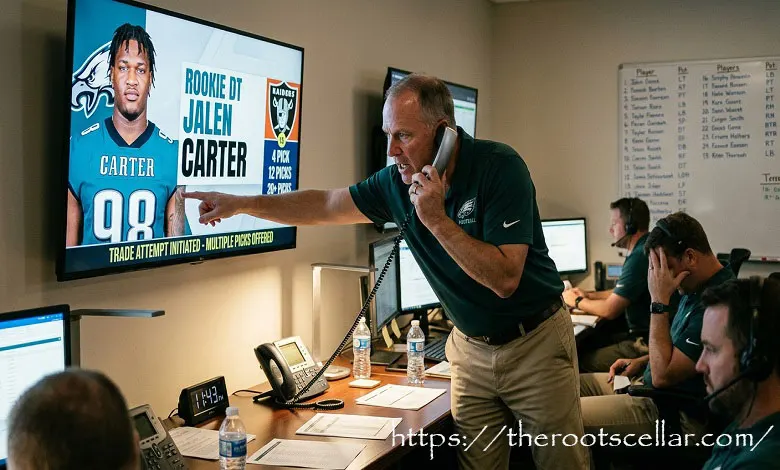
Talk around an eagles rookie trade attempt has been building among NFL fans, especially as the Philadelphia Eagles continue to handle their roster in a way that feels different from many other teams. It’s not always tied to one specific deal. Instead, it reflects a pattern in how the organization approaches draft picks, rookies, and trade opportunities.
The Eagles have shown that they are willing to stay flexible. They don’t simply draft players and wait for long-term results. If there’s a chance to improve the team immediately, they are open to moving picks or exploring trades connected to rookies. That mindset has made their decisions more unpredictable, but also more interesting to follow, especially for those trying to understand how modern NFL teams build and adjust their squads.
The Real Meaning Behind an Eagles Rookie Trade Attempt
When people search for eagles rookie trade attempt, they are usually referring to situations where the team tries to make a move involving a rookie or a draft pick tied to one. This can happen before the draft, during the draft, or even shortly after a player has been selected.
One clear example came when the Eagles aggressively tried to move up in the draft to secure a player they believed in. Reports showed that Philadelphia attempted to climb as high as pick No. 18 to land linebacker Jihaad Campbell, showing just how serious they were about getting their target.
Even though they didn’t need to move that far in the end, the attempt itself says a lot. The Eagles weren’t content to sit back and hope. They were ready to trade assets—including picks tied to rookies—to control the outcome.
A Front Office That Doesn’t Sit Still
One thing that separates Philadelphia from many other NFL teams is how active their front office is. The Eagles don’t wait for opportunities—they go looking for them.
This mindset shows up every offseason. Trade talks, roster reshuffling, and draft maneuvering are almost constant. Even when nothing happens publicly, there is usually movement behind the scenes.
Recent reports highlight how willing the team is to explore deals, even involving key players. Trade discussions around major names have surfaced multiple times, showing that no asset is completely off-limits if the right opportunity appears.
That same thinking applies to rookies. Instead of seeing them as long-term projects only, the Eagles treat them as part of a larger system of assets that can be used, moved, or reshaped depending on what the team needs.
Why the Eagles Are Willing to Move Rookie Assets
At first glance, trading a rookie—or even trying to—might seem risky. After all, rookies represent potential. But in the Eagles’ system, potential is just one piece of the puzzle.
There are several reasons why a rookie trade attempt makes sense for a team like Philadelphia.
One major factor is timing. The Eagles are often in a “win-now” window, meaning they prioritize immediate impact over long-term development. If trading a pick or rookie helps fill a gap quickly, they’re willing to consider it.
Another factor is roster depth. The Eagles regularly build strong squads, and that can leave limited space for young players to develop. In such cases, moving a rookie or pick can be more practical than letting talent sit unused.
There’s also the question of value. Sometimes a rookie’s highest value is before they even play a snap. If another team sees potential, that value can be turned into something more immediate.
Draft-Day Aggression: A Key Part of the Strategy
If there’s one moment where eagles rookie trade attempt becomes most visible, it’s on draft day.
Philadelphia has shown a clear willingness to trade up, trade down, or swap picks to get exactly what they want. The attempted move for Jihaad Campbell is just one example of how aggressive they can be.
This approach reflects a deeper belief: the draft is not just about selecting players—it’s about controlling the board. By moving around, the Eagles increase their chances of landing players who fit their system perfectly.
Rather than settling for whoever falls to them, they actively shape their draft outcome. That mindset naturally leads to more trade attempts involving rookies.
Not Just Draft Picks: Moving Young Players Too
The Eagles’ approach doesn’t stop once the draft is over. In some cases, they’ve been willing to move players shortly after acquiring them.
A good example is wide receiver John Metchie III, who was traded to Philadelphia and then dealt again within the same season as part of another move.
Situations like this show how the team treats young players as flexible assets. It’s not necessarily about giving up on a player—it’s about using available resources to improve the overall roster.
This kind of activity feeds into the idea of an “Eagles rookie trade attempt,” even when the move happens after the draft.
The Salary Cap Factor Behind These Moves
Another important piece of the puzzle is money. The NFL salary cap forces teams to think carefully about how they build their rosters.
For a team like the Eagles, which often carries high-profile contracts, flexibility becomes crucial. Instead of committing too much money to one area, they sometimes use rookie contracts or draft picks as trade tools.
This allows them to stay competitive without creating long-term financial problems. It’s a balancing act between spending, saving, and staying flexible enough to react when opportunities arise.
How Fans and Analysts View These Decisions
Whenever the Eagles are linked to trade attempts—especially involving rookies—it sparks debate.
Some fans love the aggressive approach. They see it as a sign that the team is always trying to improve and stay ahead of the competition. In a league where small advantages matter, that mindset can be valuable.
Others are more cautious. They worry that moving rookies too quickly could mean missing out on future stars. Not every decision works out, and the risk is always there.
Analysts tend to fall somewhere in the middle. Many acknowledge that the Eagles’ strategy is bold, but they also point out that it requires strong decision-making and accurate player evaluation to succeed.
How This Strategy Fits into the Modern NFL
The idea behind an eagles rookie trade attempt is not unique anymore—but Philadelphia is one of the teams doing it most consistently.
The NFL has become more dynamic, with trades happening more frequently than in the past. Teams are less willing to wait years for development and more focused on immediate results.
In that environment, flexibility becomes a competitive advantage. The Eagles have embraced this shift, using trades—especially those involving rookies and draft picks—as a core part of their identity.
What to Expect Moving Forward
Looking ahead, it’s safe to assume that the Eagles will continue exploring rookie trade opportunities.
Their recent behaviour suggests that this isn’t a temporary strategy—it’s part of how they operate. Whether it’s moving up in the draft, trading picks, or reshaping the roster midseason, the approach remains consistent.
As long as the team stays competitive and the front office remains aggressive, the idea of an eagles rookie trade attempt will continue to surface in conversations, headlines, and fan discussions.
Final Thoughts
The phrase “eagles rookie trade attempt” might sound like a single event, but it actually represents a much bigger idea. It reflects how the Philadelphia Eagles think about building a team in today’s NFL.
Instead of sticking to one method, they stay flexible. They draft, trade, adjust, and adapt—sometimes all within the same season. Rookies are part of that system, not separate from it.
In a league where standing still often means falling behind, the Eagles have chosen a different path. Whether you agree with it or not, one thing is certain: they are always willing to make a move.
FAQs About Eagles Rookie Trade Attempt
A: It refers to situations where the Eagles try to trade for, trade away, or move assets related to rookies or draft picks.
A: Yes, they attempted to trade up in the draft to secure a specific rookie, showing their willingness to move assets.
A: To gain immediate value, improve the roster, or adjust to team needs and salary cap constraints.
A: It can be, especially if a traded rookie becomes successful elsewhere, but it can also provide quick improvements.
A: Yes, but the Eagles are known for being more aggressive and consistent in using this approach.